
Machu Picchu
The iconic 15th-century Inca citadel located in the Andes Mountains of Peru.
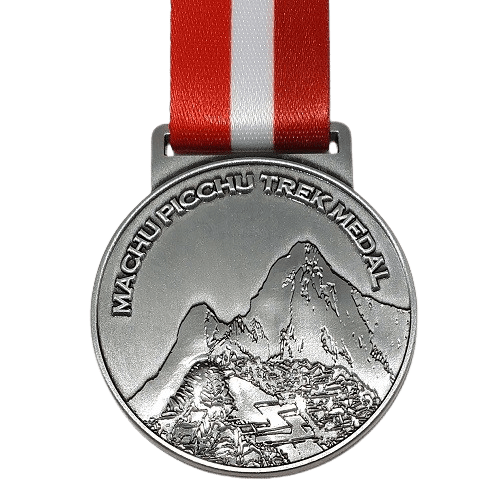
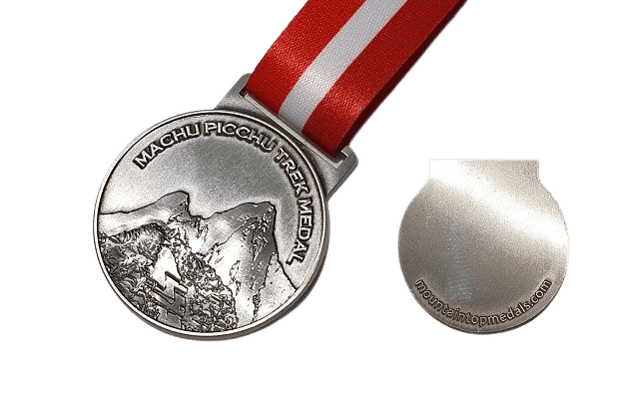
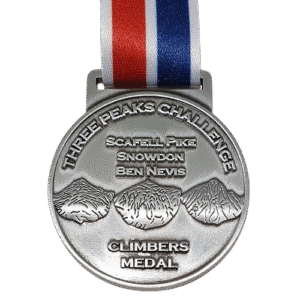
The medal is die-cast and crafted from zinc alloy with antique nickel plating and has a rugged look with Machu Picchu and words themselves in 3D. The reverse of the medal is flat and suitable for engraving.
‘Virú’
Celebrating the Heritage of Peru
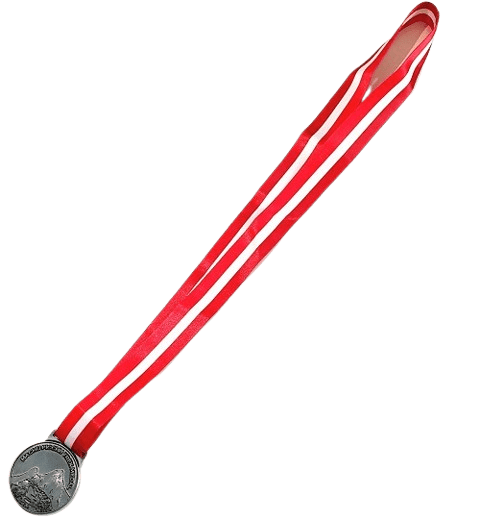
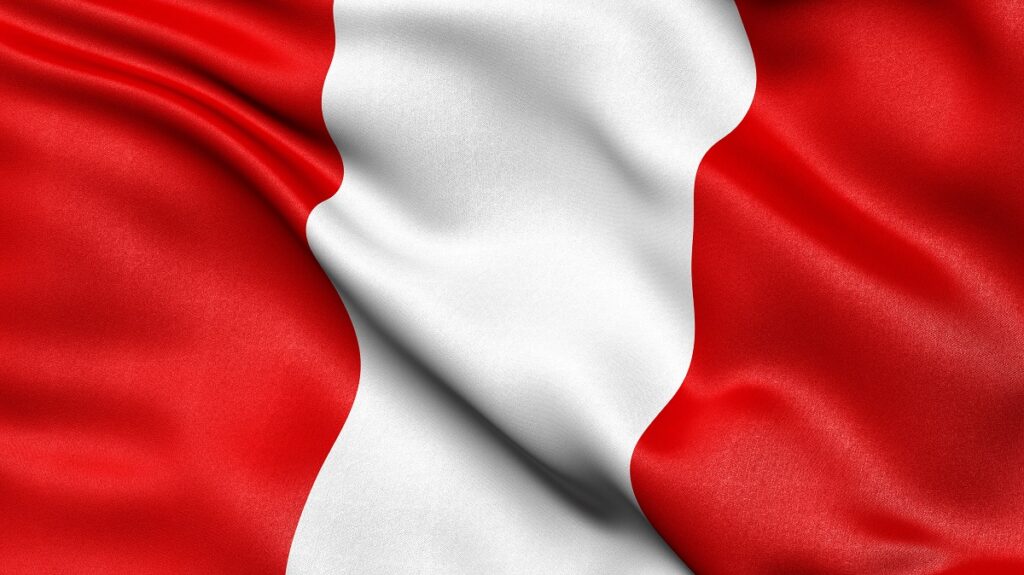
Our unique medal ribbon is 2.5cm wide by 45cm long (total ribbon size is 90cm) and the colour bands signify the flag of Peru.
Red represents the blood shed by those who fought for Peru’s independence, while white signifies peace and purity.
Celebrating the Heritage of Machu Picchu
Origins & Construction (15th Century)
● Machu Picchu was built around 1450 AD during the reign of the Inca emperor Pachacuti (1438–1472).
● Pachacuti expanded the Inca Empire across much of western South America.
● Its location is 2,430 metres (7,970 feet) above sea level.
● It was strategically chosen for its natural defences and proximity to sacred mountains and rivers.
● It served as a royal estate or retreat for the Inca elite, possibly functioning as a religious, ceremonial, and administrative centre.
● The site was constructed using classic Inca dry-stone masonry, with precisely cut stones fitting together without mortar.
Purpose & Function
● Royal Retreat: Some historians believe it was a private estate for Pachacuti and his family.
● Religious Sanctuary: The presence of temples (e.g., the Temple of the Sun, Intihuatana stone) suggests it was a spiritual center.
● Astronomical Observatory: Structures align with solstices and equinoxes, indicating advanced astronomical knowledge.
● Agricultural Hub: Terraces (andenes) allowed farming on steep slopes, sustaining the population.
Abandonment & “Lost” Period (16th Century)
● Machu Picchu was abandoned around 1572, likely due to the Spanish conquest of the Inca Empire.
● Unlike other Inca sites (e.g., Cusco), the Spanish never found Machu Picchu, leaving it largely undisturbed.
● Over time, the jungle reclaimed the site, and it faded from public memory, known only to local Quechua people.
Rediscovery (1911)
● On July 24, 1911, American historian and explorer Hiram Bingham was led to the ruins by a local farmer, Melchor Arteaga.
● Bingham mistakenly believed he had found Vilcabamba, the last refuge of the Incas, but later research confirmed it was Machu Picchu.
● His expeditions (1911–1915) brought international attention to the site, though his removal of artifacts to Yale University sparked controversy (many were later repatriated to Peru).
Modern Recognition & Preservation
● Declared a Peruvian Historical Sanctuary in 1981.
● Named a UNESCO World Heritage Site in 1983.
● Voted one of the New Seven Wonders of the World in 2007.
● Today, it is Peru’s most visited tourist attraction, with strict visitor limits to prevent degradation.
Mysteries & Ongoing Research
● Why was it abandoned? Theories include disease, Spanish invasion, or the death of Pachacuti.
● How was it built? The precise stone-cutting and transport methods remain partly unexplained.
● Was it truly “lost”? Evidence suggests some outsiders knew of its existence before Bingham.
Machu Picchu stands as a testament to Inca engineering, spirituality, and resilience. Its dramatic setting and enigmatic history continue to captivate archaeologists, historians, and travelers alike.


Reviews
There are no reviews yet.