
Great Wall of China
The Great Wall of China’s altitude varies significantly along its length.
Its highest point, at Huanglouwa (80km NW of Beijing), is 1,439 metres (4,722 feet). Conversely, the wall ends at sea level in the Bohai Sea.
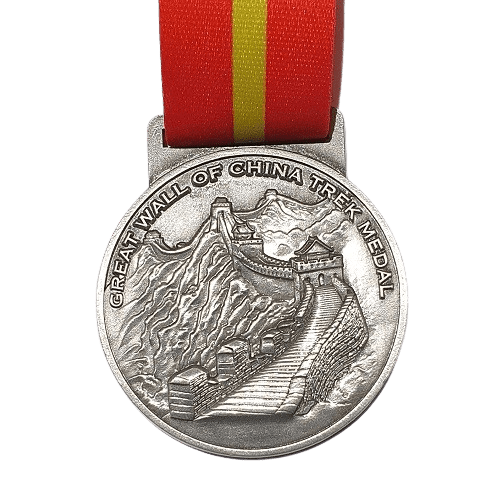
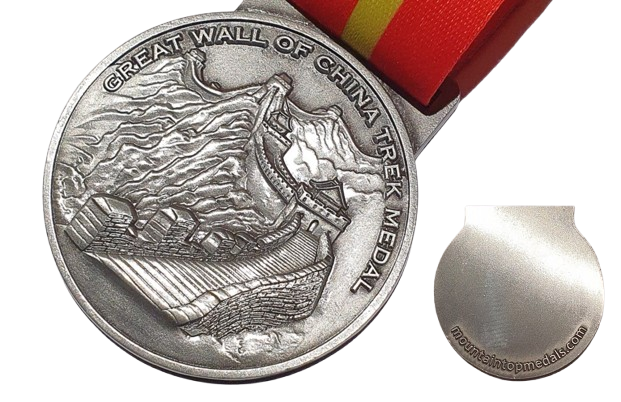
The medal is die-cast and crafted from zinc alloy with antique nickel plating and has a rugged look with the mountain and words themselves in 3D. The reverse of the medal is flat and suitable for engraving.
‘Zhōngguó‘
Celebrating the Heritage of China
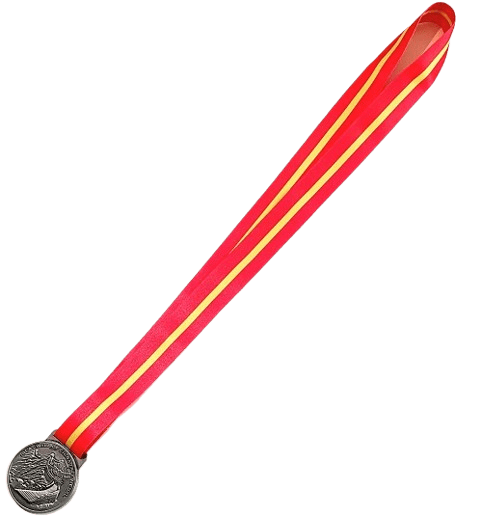
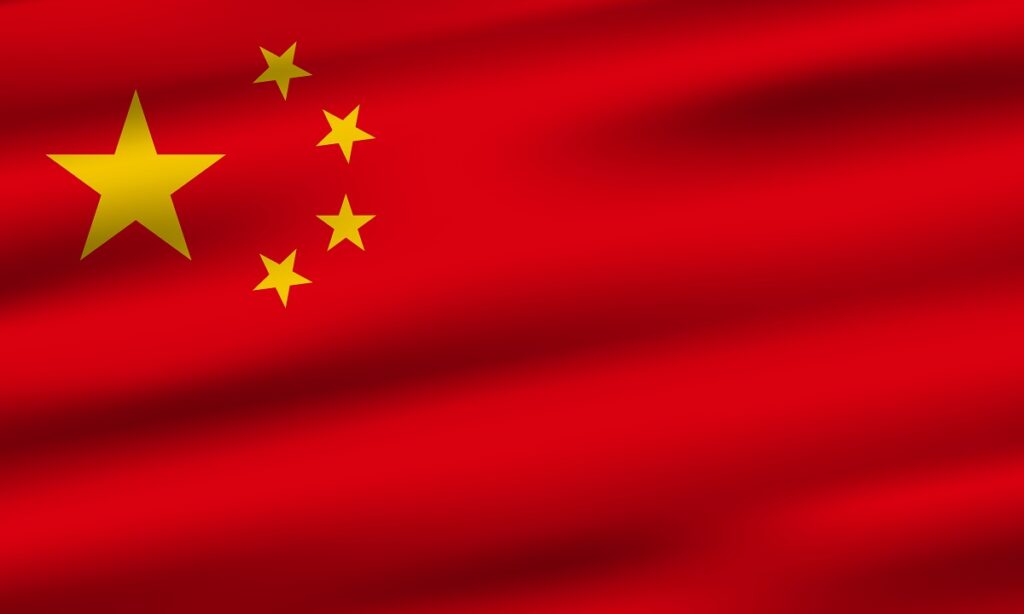
Our unique medal ribbon is 2.5cm wide by 45cm long (total ribbon size is 90cm) and the colour bands signify the flag of China.
The red color is a traditional Chinese colour symbolising revolution and the sacrifices made during the Chinese Communist revolution. The large star represents the Chinese Communist Party (CCP), which is the ruling political party of China and is seen as the guiding force of the nation. The four smaller stars represent the four social classes that are united under the leadership of the CCP. The orientation of the four smaller stars surrounding the larger one signifies the unity of the Chinese people under the leadership of the CCP.
Celebrating the Heritage of the Great Wall of China
The Great Wall of China is one of the most iconic structures in history, built over centuries to protect China from northern invasions.
Early Beginnings (7th – 3rd Century BCE)
● The earliest walls were built by small states during the Spring and Autumn (770-476 BCE) and Warring States (475-221 BCE) periods for defence against each other and nomadic tribes.
Qin Dynasty (221-206 BCE) – First Unified Wall
● After unifying China, Emperor Qin Shi Huang connected and extended existing walls to defend against the Xiongnu nomads.
● Built using rammed earth, stones, and forced labour (many workers died during construction).
Han Dynasty (206 BCE-220 CE) – Western Expansion
● Extended the wall into the Gobi Desert to protect the Silk Road trade routes.
● Used watchtowers and beacon towers for communication.
Ming Dynasty (1368-1644) – Most Famous Sections
● Facing Mongol threats, the Ming rebuilt the wall with bricks and stone, creating the most well-preserved sections seen today (e.g., Badaling, Mutianyu).
● Stretched over 5,500 miles (8,850 km) with forts, gates, and garrisons.
Decline & Modern Recognition
● After the Ming, the wall lost military importance but became a symbol of Chinese resilience.
● UNESCO World Heritage Site (1987) and one of the New Seven Wonders of the World (2007).
● Many sections are now restored for tourism, though some parts have eroded.
Myth vs. Reality
● Not visible from space with the naked eye (a common myth).
● Built by soldiers, peasants, and prisoners – millions worked (and died) on it.
Today, the Great Wall remains a monument to China’s ancient engineering and defence strategies.



Reviews
There are no reviews yet.