
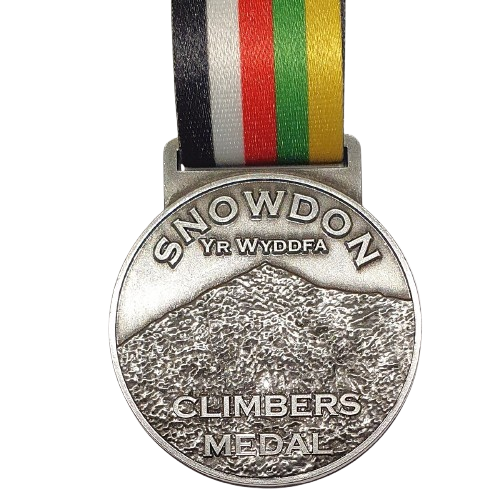


Snowdon
Snowdon is the highest mountain in Wales and stands at 1,085 metres (3,560 feet).
The medal is die-cast and crafted from zinc alloy with antique nickel plating and has a rugged look with the mountain and words themselves in 3D. The reverse of the medal is flat and suitable for engraving.

‘Cymru’
Celebrating the Heritage of Wales
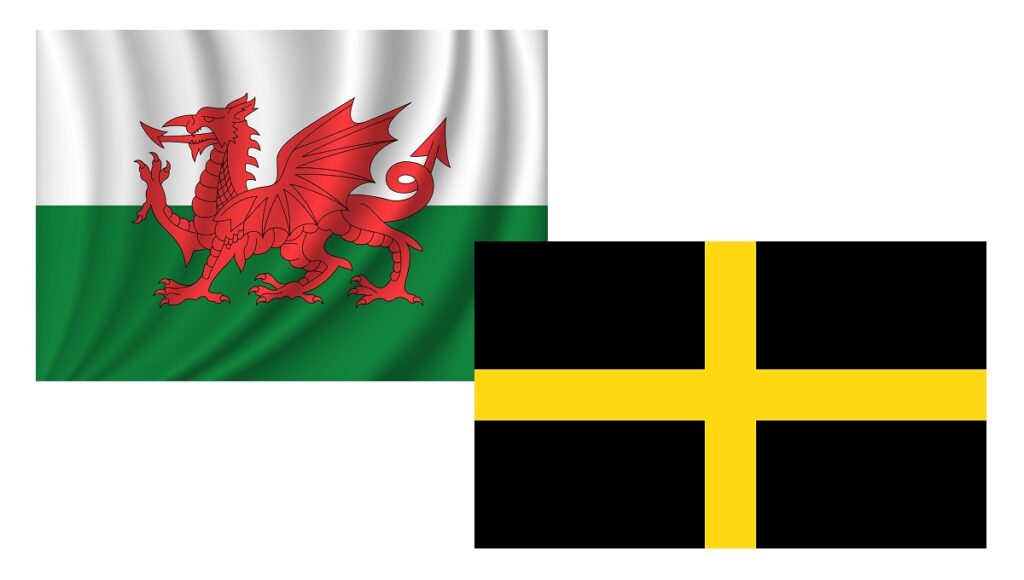
Our unique medal ribbon is 2.5cm wide by 45cm long (total ribbon size is 90cm) and the colour bands signify the Welsh flag and the Saltire of St. David.
The red dragon is a powerful symbol of Wales, representing courage, strength, and defiance against invaders. The green and white stripes are said to symbolise the verdant valleys and hills of Wales.
St David is the patron saint of Wales. It is a symbol of Welsh identity and heritage, often flown on St. David’s Day, March 1st. The flag is also associated with the Diocese of St. David’s in Pembrokeshire.
Celebrating the Heritage of Snowdon
Geological Origins
Snowdon was formed around 500 million years ago during the Ordovician Period through volcanic activity. Glaciers during the last Ice Age carved its distinct ridges and valleys, including the famous Cwm Idwal and Llyn Llydaw.
Human History
– Bronze Age (c. 2000–800 BCE): Evidence of early settlements and burial cairns.
– Roman Era (1st–4th century CE): Possible mining activity for copper and gold.
– Medieval Period: Snowdon was a natural fortress for Welsh princes, including Llywelyn the Great, who used the area for defense.
– 18th–19th Century: The mountain became a tourist attraction, with Thomas Pennant popularizing it in travel writings.
– 1896:The Snowdon Mountain Railway opened, allowing visitors to reach the summit by train.
Modern Significance
Today, Snowdon is a major hiking and climbing destination, with paths like the Llanberis Path and Pyg Track. The summit features a visitor center, Hafod Eryri, rebuilt in 2009.
Snowdon remains a symbol of Welsh heritage, inspiring legends of King Arthur and poets like William Wordsworth.


Reviews
There are no reviews yet.