

Aconcagua
The highest peak in the Western and Southern Hemispheres, standing at 6,961 metres (22,838 ft), it is considered the highest point outside of Asia.
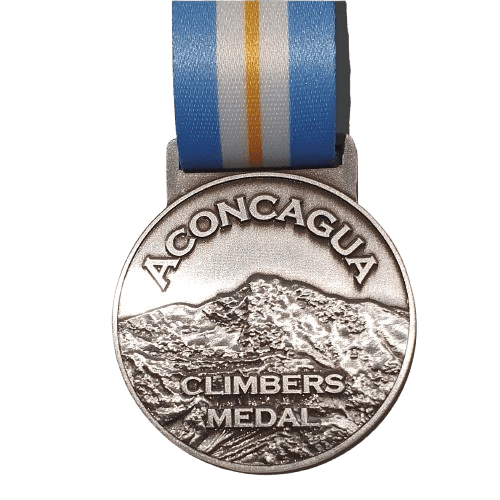
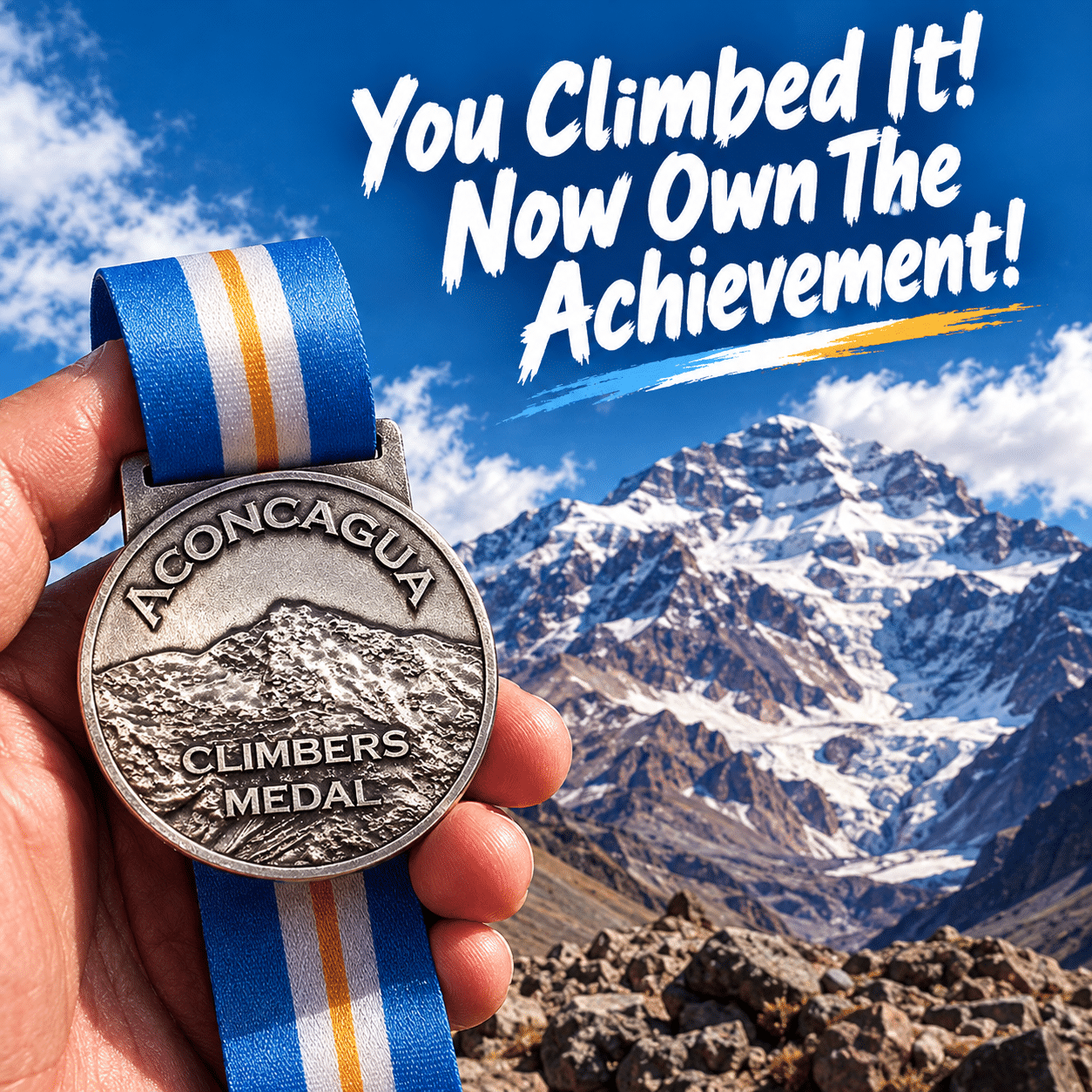
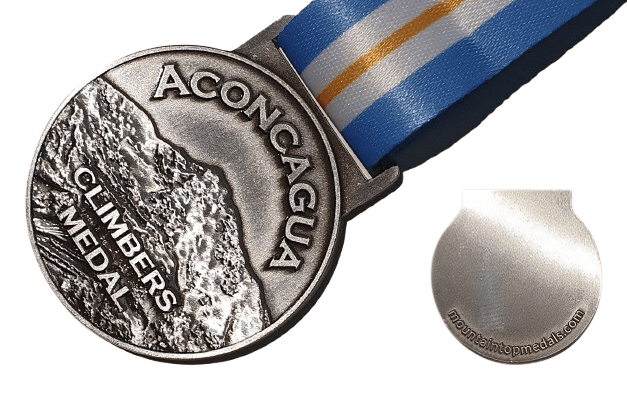
The medal is die-cast and crafted from zinc alloy with antique nickel plating and has a rugged look with the mountain and words themselves in 3D. The reverse of the medal is flat and suitable for engraving.

‘Inca Sun’
Celebrating the Heritage of Argentina
Our unique medal ribbon is 2.5cm wide by 45cm long (total ribbon size is 90cm) and the colour bands signify the flag of Argentina.
The light blue stripe at the top and bottom represent the sky, the white stripe in the middle symbolises clouds, and in the centre, on the white stripe, is the ‘Sun of May’ (El Sol de Mayo), a golden sun with a human face and 32 rays, commemorating the appearance of the sun through the clouds during the beginning of Argentina’s struggle for independence in May 1810.
Celebrating the Heritage of Aconcagua
The Mountain’s Ancient Past
Long before human history, Aconcagua was born from the slow, colossal collision of the Nazca and South American tectonic plates. This process, which continues today, thrust the Andes mountains skyward. Aconcagua is not a volcano but a huge granitic massif, a remnant of an ancient subduction zone where the Pacific oceanic plate slid beneath the continent, pushing up sedimentary rock that was later folded and uplifted over millions of years.
Name and Indigenous Significance
The origin of the name “Aconcagua” is debated, but it likely comes from the Quechua words “Ackon Cahuak” (“Stone Sentinel” or “Sentinel of Stone”) or the Aymara words “Janq’u Q’awa” (“White Ravine”). For the indigenous Incas and pre-Incan peoples, the mountain was a sacred apu (a powerful mountain spirit), a dominant feature in their cosmology and a likely site for ceremonial offerings. Archaeological findings high on the mountain, including a well-preserved Inca mummy, confirm its ritual significance.
“Discovery” and the First Recorded Ascent
● European “Discovery”: While local people knew it intimately, the first European record of the mountain is attributed to Spanish conquistador Diego de Almagro in 1535, as he led an expedition south from Peru.
● The First Summit: For centuries, it was believed no human could stand on its summit. That changed on January 14, 1897, when Swiss mountaineer Matthias Zurbriggen reached the top alone as part of a British-led expedition under Edward FitzGerald. This feat cemented Aconcagua’s place in mountaineering history..
Modern History: Exploration and Tragedy
The 20th century saw Aconcagua transform from a remote peak into a major mountaineering objective.
● New Routes: The difficult Polish Glacier route was first climbed in 1934, opening the era of technical ascents on the mountain.
● Tragedy and Fame: The mountain’s extreme weather and altitude have always been its greatest danger. The story of the 1973 expedition, where a member fell into a crevasse and others suffered severe frostbite, was immortalized in the book and film “Alive” (though this incident occurred on the nearby Cerro Torre, Aconcagua’s reputation for danger was solidified by such stories from the Andes).
● The “Normal Route”: The now-standard route via the Horcones Valley is non-technical, earning it the nickname “the world’s highest trek.” However, this is misleading, as the extreme altitude, ferocious winds (the viento blanco), and rapid weather changes make it a serious and deadly undertaking.
Aconcagua Today
Today, Aconcagua is the centrepiece of a Provincial Park created in 1983 to protect its fragile environment. It has become a major hub for adventure tourism:
● Climbing Industry: Over 3,500 climbers attempt the summit each season, supported by a robust industry of guides, muleteers, and park rangers.
● Economic Driver: It is a vital economic resource for the province of Mendoza.
● Ongoing Challenge: It remains a coveted “Seven Summits” peak and a formidable test of human endurance, with a success rate of around 30-40% and an average of several fatalities per year, a sobering reminder of its power.
In summary, Aconcagua’s history spans from its geological creation and indigenous reverence to its “discovery” by Europeans, its conquest by climbers, and its current status as a protected but deadly beacon for adventurers from around the world.

Reviews
There are no reviews yet.