


Everest Base Camp Trek
Everest Base Camp (South side) within Nepal, is at an altitude of 5,364 metres (17,598 feet). There is also a Northeast Ridge Route Base Camp in Tibet at an altitude of 5,180 metres (17,000 feet).
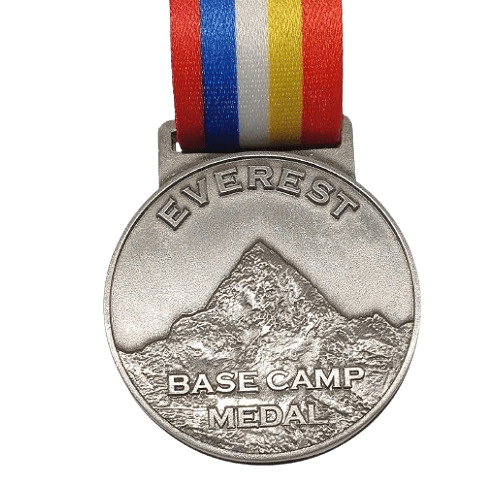
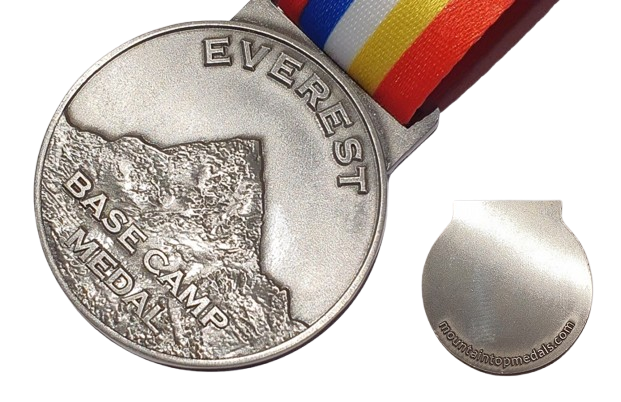
The medal is die-cast and crafted from zinc alloy with antique nickel plating and has a rugged look with the mountain and words themselves in 3D. The reverse of the medal is flat and suitable for engraving.
‘The Himalayas’
Celebrating the Heritage of Nepal & Tibet
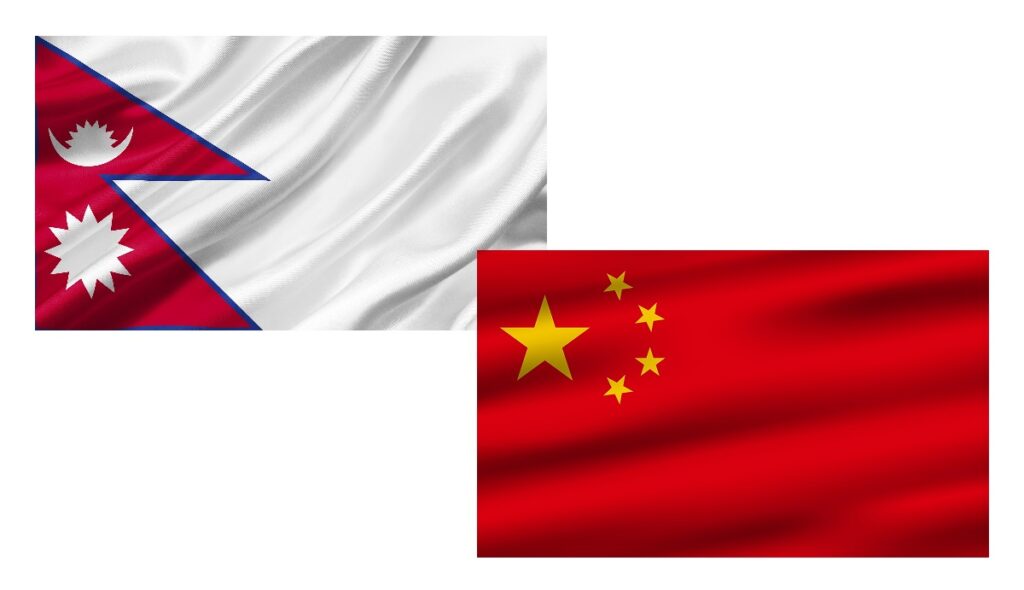
Our unique medal ribbon is 2.5cm wide by 45cm long (total ribbon size is 90cm) and the colour bands signify the flag of Nepal and Tibet.
Nepal – The crimson red signifies bravery and courage, while the blue border represents peace and harmony. The celestial symbols, the sun and moon, symbolise permanence, hope, and the country’s enduring nature, as well as the diverse climates of Nepal. The flag’s shape itself represents the Himalayas.
Tibet Autonomous Region of China – The red color is a traditional Chinese colour symbolising revolution and the sacrifices made during the Chinese Communist revolution. The large star represents the Chinese Communist Party (CCP), which is the ruling political party of China and is seen as the guiding force of the nation. The four smaller stars represent the four social classes that are united under the leadership of the CCP. The orientation of the four smaller stars surrounding the larger one signifies the unity of the Chinese people under the leadership of the CCP.
Celebrating the Heritage of Everest
Discovery & Naming
● 1852: Identified as the highest mountain in the world by British surveyors during the Great Trigonometrical Survey of India. It was initially called “Peak XV.”
● 1865: Renamed “Mount Everest” in honour of Sir George Everest, the former Surveyor General of India (though he opposed the idea).
Local Names
● Nepal: Sagarmatha (“Goddess of the Sky”)
● Tibet: Chomolungma (“Mother Goddess of the World”)
Early Attempts & First Summit
● 1920s–1950s: Early British expeditions attempted to climb Everest from the Tibetan side.
● 1924: Famous disappearance of George Mallory and Andrew Irvine—whether they summited remains a mystery.
● 1953: Sir Edmund Hillary (New Zealand) and Tenzing Norgay (Nepal/India) became the first confirmed climbers to reach the summit on May 29, 1953, via the South Col route.
Later Milestones
● 1975: Junko Tabei (Japan) became the first woman to summit.
● 1978: Reinhold Messner (Italy) and Peter Habeler (Austria) achieved the first ascent without supplemental oxygen.
● 1980: Messner completed the first solo ascent (without oxygen or support).
● 1996: Deadliest season (15 deaths) due to a blizzard, recounted in Jon Krakauer’s Into Thin Air.
● 2010s–Present: Everest sees overcrowding, with hundreds summiting each year, leading to safety and environmental concerns.
Controversies & Challenges
● Traffic Jams: Long queues near the summit (e.g., 2019 viral photo).
● Pollution & Waste: Tons of trash and oxygen bottles left behind.
● Climate Change: Melting glaciers and shifting routes.
Everest remains a symbol of human endurance, attracting climbers despite risks. Over 300+ deaths have been recorded, yet thousands attempt it yearly.

Reviews
There are no reviews yet.